Springe direkt zu Inhalt

Publications

The Aesthetics of Collective Agency: Corporations, Communities and Crowds in the Twenty-First Century

Twenty-first-century Western culture is characterized by profound transformations in its forms of collective organization. While traditional institutions of Western liberal democracies still wield significant political power, new forms of collective agency – most visible in progressive social protest movements, but also in the global rise of populism – have increasingly put pressure on established systems of collective organization. The contributors to this volume explore the social, political, and aesthetic forms that collective agency takes in the twenty-first century across a variety of media, including social platforms such as TikTok, multiplayer video games, and contemporary lyric poetry

The Corporation in the Nineteenth-Century American Imagination

This book examines the way the corporation – a legal concept of enduring and timely importance in the Anglo-American legal tradition – was imagined in the nineteenth century historical imagination. It traces the ways in which literary and cultural representations of the corporation in nineteenth-century America helped shift how the corporation was envisioned; from a public tool meant to serve the common good, to an instrument of private enterprise. She explores how artists and writers together with lawyers and economists represented this transformation through narrative and metaphor. Drawing on a range of legal, literary and visual texts, she shows how the corporation’s public origins as well as its fundamentally collective nature continued to be relevant much longer than previous scholarship has argued.

Fictions of Management

This spring saw the publication of a volume that James Dorson coedited with Jasper Verlinden titled "Fictions of Management: Efficiency and Control in American Literature and Culture" (Winter, 2019). The collection of essays addresses the intersection of management theory and cultural practices through the lens of US literature and culture.

From the organization of private businesses and public services to the optimization of everyday life, management is a ubiquitous term today. Denoting efficiency and control, management has become a catchall term for successful living in neoliberal times. The term is so ubiquitous that it often avoids scrutiny outside of business schools and organizational theory. As the essays collected in ‘Fictions of Management’ show, however, management has a history closely bound up with cultural practices. While the meaning of management has been critically negotiated in literature since the industrial revolution, management theory in turn draws on cultural resources for animating technical rationality with engaging stories and corporate visions. Tracing the relationship between management and fiction in the United States, where the mutual influence between the two has been the greatest and shaped management culture globally, the contributors to this volume provide a unique perspective on changing forms of management through the lens of American literature and culture.

Drawing on the Past

Lange wurden Comics als triviale Unterhaltung verpönt. Erst in den letzten Jahrzehnten hat sich das geändert. Immer häufiger sind sie zum Medium der Wahl für Künstlerinnen und Künstler geworden, die kritisieren wollen, wie die etablierten Medien mit politischen Fragen umgehen. Dieses Buch untersucht das Potenzial von dokumentarischen Comics im Kontext einer sich schnell verändernden und immer weiter entwickelnden visuellen Kultur. Im Mittelpunkt steht dabei gerade auch die Darstellung historischer Ereignisse und die Auseinandersetzung mit Fotografie.

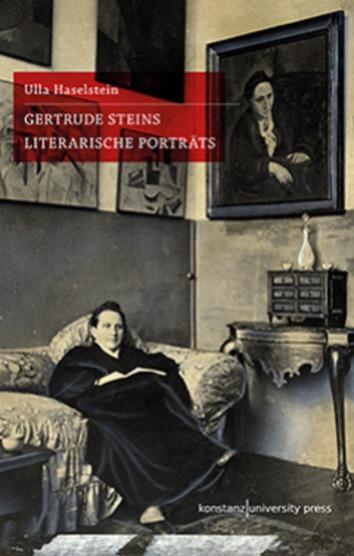
Gertrude Steins literarische Porträts

Gertrude Stein (1874-1946) ist eine Ikone der Klassischen Moderne: ihre Freundschaft mit Matisse und Picasso, ihr Pariser Salon, ihre Gemäldesammlung und ihre Liebesbeziehung zu Alice Toklas sind in zahlreichen Memoiren und Biographien beschrieben worden - nicht zuletzt von ihr selbst. Doch »Rose is a rose is a rose is a rose« ist der einzige Satz dieser Autorin, der allgemein bekannt ist. Aufgrund der Serialität und Abstraktheit gelten viele ihrer literarischen Texte als unlesbar. Folgt man aber den Spuren, die diese Texte auslegen, und stellt Steins Arbeiten in den Kontext der Literatur-, Kunst- und Wissenschaftsgeschichte um 1900, ist eine Autorin der Avantgarde als Kulturtheoretikerin neu zu entdecken.
Stein hatte bei William James und Hugo Münsterberg in Harvard studiert. Sie war ausgebildete experimentelle Psychologin und Menschenbeobachterin aus Leidenschaft. In einer Parallelaktion zu Sigmund Freud entwickelte sie vor dem Hintergrund der zeitgenössischen Forschung zu Hysterie und Suggestion einen Übertragungsbegriff und eine charakterpsychologische Typenlehre. Die Auseinandersetzung mit Flaubert und Cézanne und die Begegnung mit Matisse und Picasso eröffneten ihr neue Möglichkeiten einer selbstreflexiven literarischen Komposition, und schließlich gestattete ihr das freiwillige Exil in Frankreich einen distanzierten Blick auf die amerikanische Kultur. Steins Texte sind im Kern Porträts und Selbstporträts zugleich. Ihnen liegt das Interesse an der Umgangssprache als dem zentralen Medium moderner Gesellschaften zugrunde, das durch serielle Wiederholungen Bewusstsein und Identität der Subjekte erzeugt und standardisiert. In Haselsteins Studie ist eine der wichtigsten Positionen der Moderne wiederzuentdecken und mit dieser eine ebenso originelle wie außergewöhnliche literarische Stimme, die die Singularität des Individuums zu erfassen versucht.